By Brad Bowman
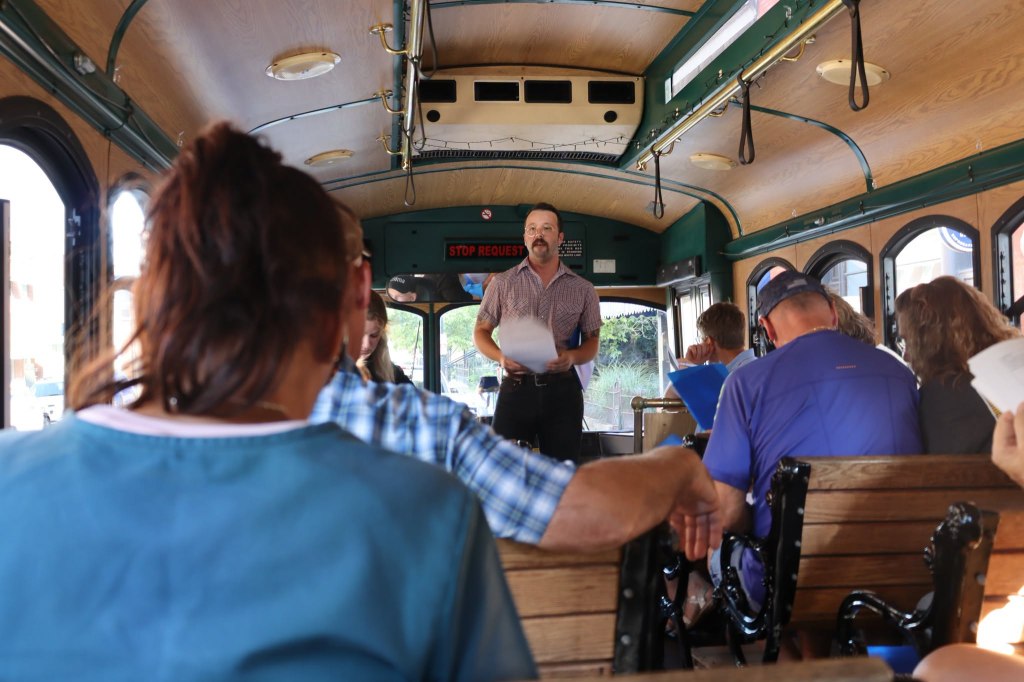
On a recent trolley ride through Maysville, the conversation wasn’t about where passengers had been, but about where their community might be going.
As the trolley traveled through the city, local residents pointed out brownfield properties: vacant or abandoned industrial and commercial properties where redevelopment may be complicated by real or perceived environmental contamination. They talked about what once occupied those spaces, who owned them and what the properties had meant to the community over the years.
But they were also tasked to imagine something different: What could or should these places become.
The trolley tour, a windshield survey of properties, is part of the ongoing work by the Kentucky Energy and Environment Cabinet’s (EEC) Brownfield Program and Blueprint Kentucky to help communities identify properties that could potentially be assessed, cleaned up and returned to productive use.
For communities, the future can begin with something as simple as looking at a familiar building differently.
“The bus tour was an important first step in the process,” EEC Brownfield Program Coordinator Kiersten O’Leary said. “It gave us an opportunity to get out into the community, identify potential sites, learn more about property ownership and site history, and hear directly from residents about what they would like to see these properties become.”
Maysville has seen the impact from brownfield revitalization, O’Leary said, with a successful $2 million cleanup grant awarded for the former Hayswood Hospital site.
New statewide funding is allowing locals, EEC and Blueprint Kentucky to take a closer look at sites across Kentucky, “conduct environmental assessments and help property owners and community leaders better understand what it may take to move these properties toward cleanup and redevelopment,” O’Leary said.
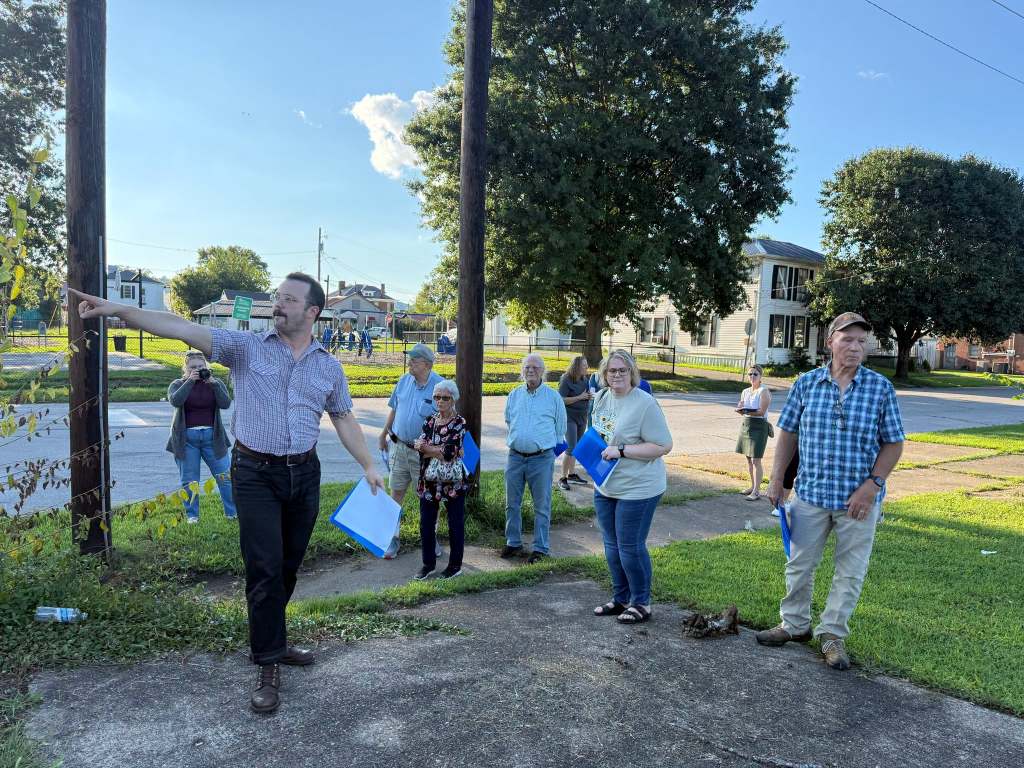
More than cleaning up property
Brownfields are properties where the presence or potential presence of hazardous substances, pollutants or contaminants can complicate redevelopment or reuse.
But work surrounding them is about much more than environmental assessment.
Tyler McDaniel, who works with Blueprint Kentucky and partners closely with EEC’s Brownfield Program, said addressing these properties can improve community health while also creating opportunities for economic development.
McDaniel recently hosted two trolley tours around the east and west ends of Maysville. McDaniel said the groups crammed a lot into a short amount of time..
“There is that community health piece, there’s the economic piece,” McDaniel said, adding that redevelopment can also help bring people back into shared spaces and strengthen social and civic life and lessen social isolation for residents.
For McDaniel, there is another, less tangible benefit: giving people an opportunity to form new relationships with places they already know and “create new memories in these familiar spaces.”
Asking Maysville residents to imagine what comes next
In Maysville, community engagement took an unusual form.
What began as an effort to inventory potential brownfield sites quickly became something of a community storytelling project, McDaniel said.
Residents shared what they knew about properties, their history, ownership and their own connections to them. That local knowledge can help identify properties, McDaniel said, that may be good candidates for future environmental assessments.
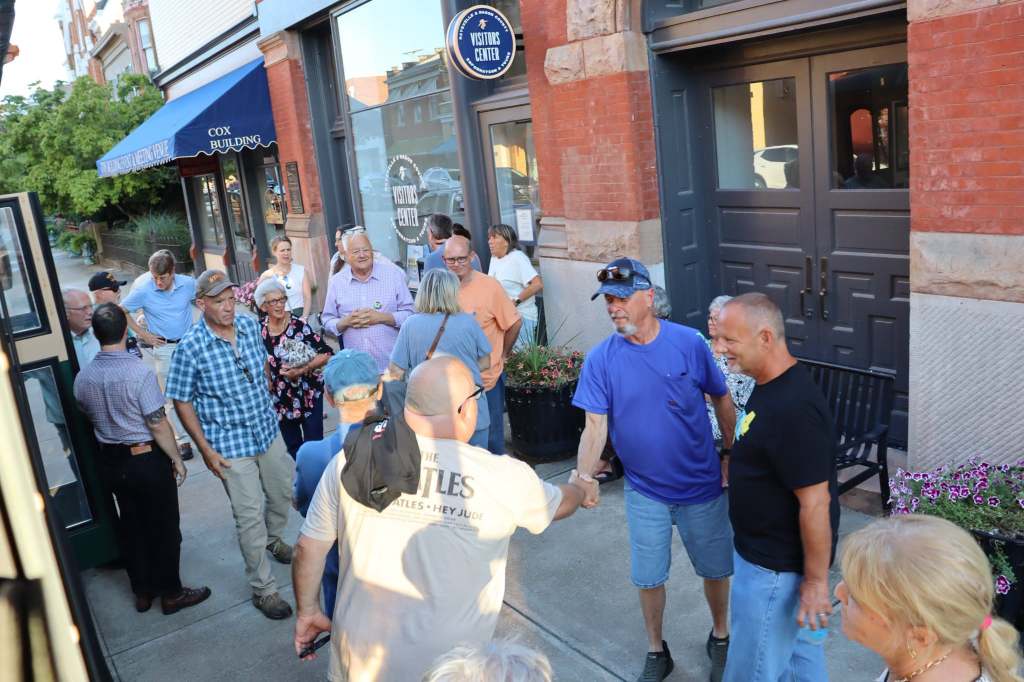
Participants also left the trolley for a walking audit of a corridor containing several potential brownfield properties. They looked at sidewalks, signage, infrastructure and street safety, considering not only individual properties but the experience of moving through the neighborhood itself.
“Every community’s needs are different,” McDaniel said. “And revitalization has a reverberating impact, there’s better infrastructure build outs, improved sidewalks, getting property back on the tax rolls…but brownfield redevelopment also mends fractured social and civic life.”
According to McDaniel, it takes undesirable buildings and transforms them into potentially socially vibrant spaces, creating a greater sense of community for residents.
Want to know more?
For communities interested in exploring brownfield redevelopment, taking that first step can sometimes be intimidating. Federal programs, environmental assessments and funding requirements can seem complicated.
McDaniel said communities don’t have to navigate that process alone.
He encouraged local officials and residents who think they may have a potential brownfield property to contact the Kentucky Brownfield Program, even if they’re unsure where to begin. Program partners can help explain the process, identify potential resources and determine possible next steps.
“We’re excited to continue working alongside Maysville and our partners at Blueprint Kentucky to identify those opportunities,” O’Leary said, “…and ultimately help put more properties back into productive reuse.”
Sometimes transforming a community begins with cleanup. Sometimes it begins with an environmental assessment.
And sometimes it begins by riding through town, looking at an old building everyone has passed a thousand times and asking a deceptively simple question: What could this become?
Links: Kentucky Energy and Environment Cabinet’s (EEC) Brownfield Program
Blueprint Kentucky
Brownfield Redevelopment Webinar Series