
by Jesse Traylor
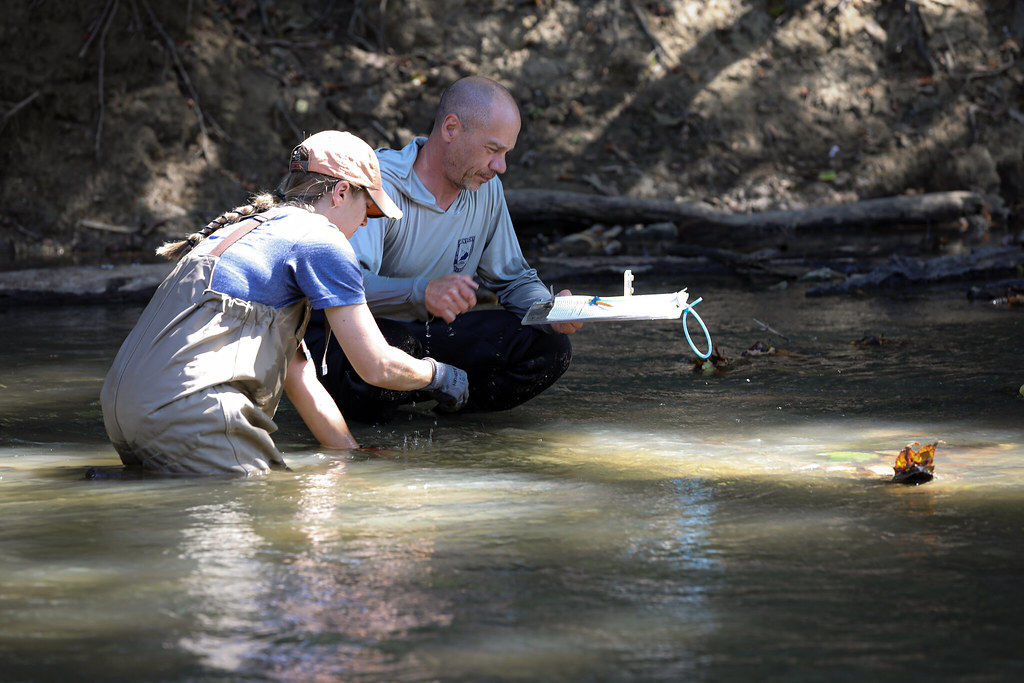
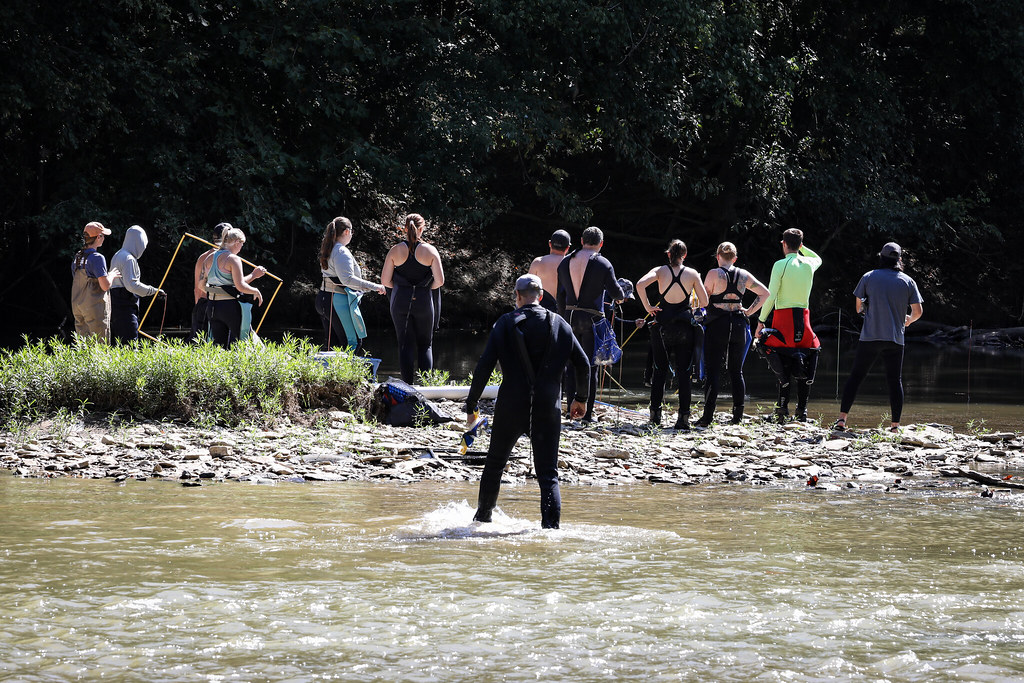
FRANKFORT, KY – A collaborative team of environmental professionals recently gathered at the Quiet Trails Nature Preserve, located along the Licking River, to conduct a comprehensive mussel survey. Participants included representatives from the Office of Kentucky Nature Preserves (OKNP), federal and Kentucky fish and wildlife agencies, the Kentucky Department of Transportation, and Resource Environmental Solutions, LLC.
“Conservation is a team sport,” said Mike Compton, aquatic zoologist, OKNP. “We have a vast collection of talented and dedicated individuals here from many different organizations helping with our efforts to monitor and conserve the diverse assemblage of mussels in the Licking River. The monitoring and stewardship of the river would not be possible without these folks, and the work happening at Quiet Trails today is a great example of those critical partnerships.”
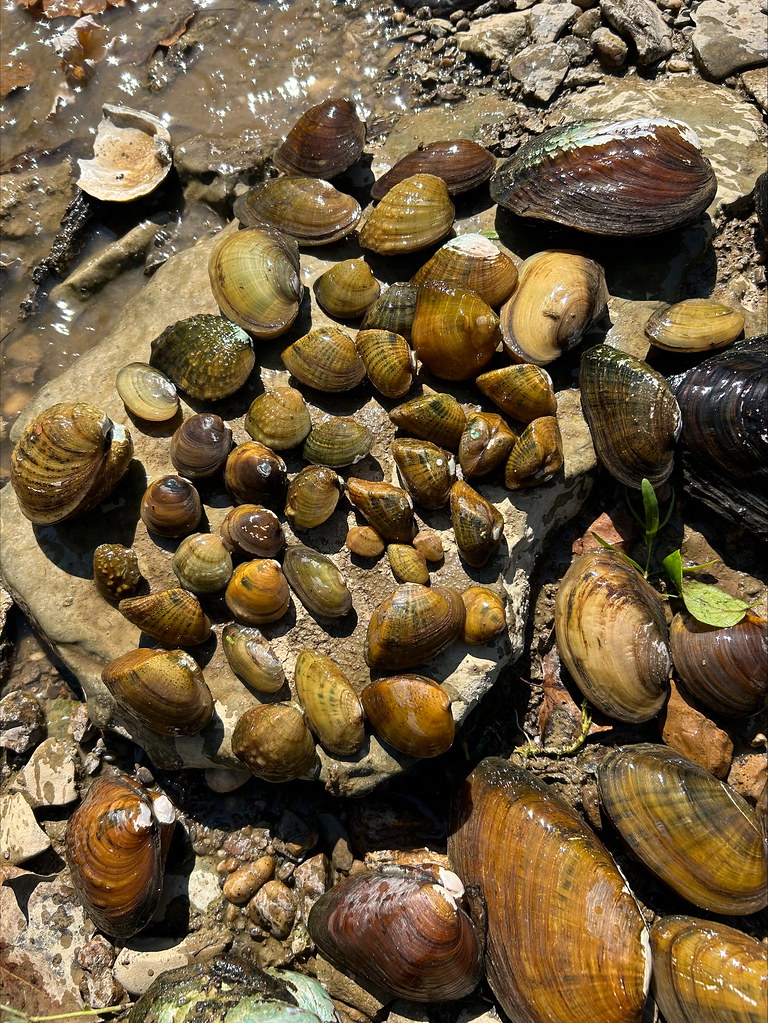
The monitoring effort, conducted every five years, seeks to assess the status of the nearly 30 mussel species at the site, including the Snuffbox mussel (Epioblasma triquetra), one of Kentucky’s federally classified endangered species. In 2022, the Center for Mollusk Conservation (CMC) successfully reared and released a population of these mussels into the preserve. One of the objectives of this assessment was to determine their survival and growth.
Freshwater mussels are one of the most imperiled groups of organisms in the world, and the loss of mussels in Kentucky is a testament to that plight. There are 105 documented species of mussels in the Commonwealth. However, over the last 200 years, 22 of those species have declined and are no longer found in the state, and 12 of those are now considered extinct. In addition, nearly half of the remaining species need significant conservation efforts.

Mussels serve as the ‘canary in the coal mine’ for nearly all of Kentucky’s waterways. The loss of mussel biodiversity is sounding the alarm, as they are extremely sensitive to poor water quality and habitat degradation. They are relatively sedentary animals that filter the water and remove nutrients, sediments, and containments. A single mussel can filter approximately 10 gallons of water a day, and a healthy bed of mussels comprised of thousands of individuals could effectively filter and clean hundreds of gallons of water a day.
“They are nature’s filtration system.” said Compton.
Mussels play a vital role in the health of the river ecosystem and their wellbeing is an excellent gauge as to the stewardship over the land and water. Therefore, the conservation and monitoring of Kentucky’s mussel population is imperative work for the Commonwealth. The collective efforts of these biologists provide resource managers with the most current information to fully manage our natural resources and guide conservation efforts across the state.

During the survey, team members systematically examined the river bottom, identifying dozens of mussel species, including the Snuffbox and other imperiled species. Preliminary results suggest the mussel bed is stable and the released Snuffbox from 2022 and 2023 are surviving and have shown good growth. These findings underscored the effectiveness of previous conservation efforts and highlighted the importance of ongoing monitoring.
The survey not only reaffirmed the collaborative efforts among conservationists, government agencies, and local stakeholders but also emphasized the critical need for continued conservation initiatives to maintain the health of Kentucky’s ecosystem.
Categories: About Us, All, EEC's Blog, Featured, Kentucky Department of Environmental Protection, Media Gallery, Water





 Land, Air & Water