
By Brad Bowman
South Shore – An estimated $16 million construction project will soon be underway to give the city of South Shore reliable, safe drinking water, replacing an emergency temporary waterline that has supplied water from Portsmouth, Ohio since South Shore shut down its city wells that were found in 2019 to contain elevated levels of “forever chemicals.”
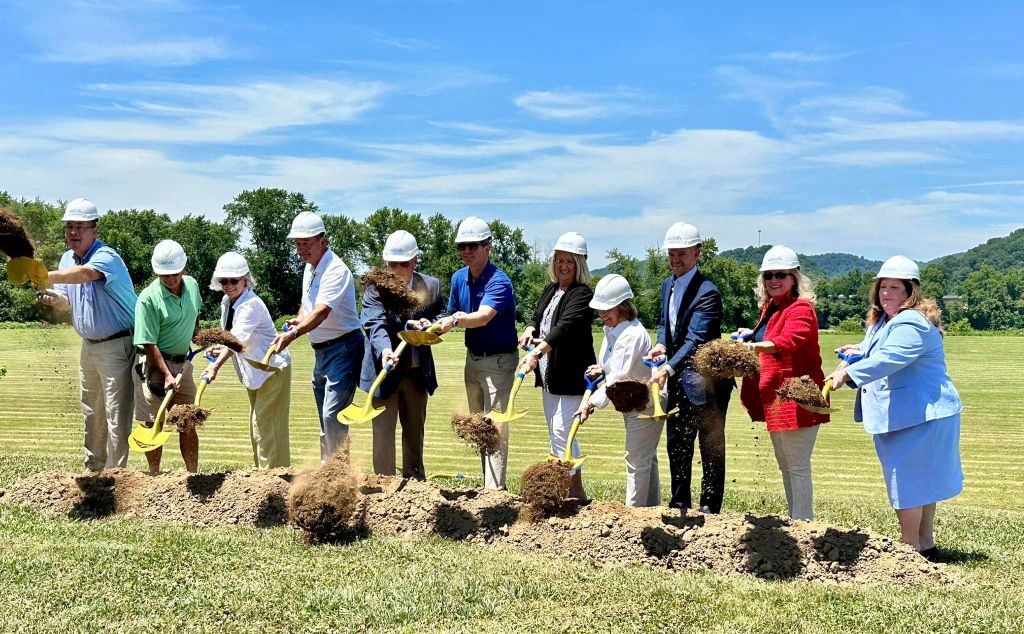
At a ground-breaking held July 2 to mark the successful partnership at the state and local level state and city officials hailed the partnership that will enable a water line to be bored under the Ohio River and permanently connect the city to a water treatment plant in Portsmouth.
“With this project, we are taking a big step forward that will have a huge positive impact on our people,” Gov. Beshear said. “I believe that access to clean drinking water is a basic human right, and by breaking ground on the new South Shore Water Connection, we’re reaffirming what we’ve been preaching since I took office – we’re investing in all of our people.”
South Shore Mayor Cheryl Moore said the construction of the permanent 20-inch diameter waterline will begin in July and take a year to complete. Once completed, the line will provide enough safe, clean drinking water for city residents and local businesses.
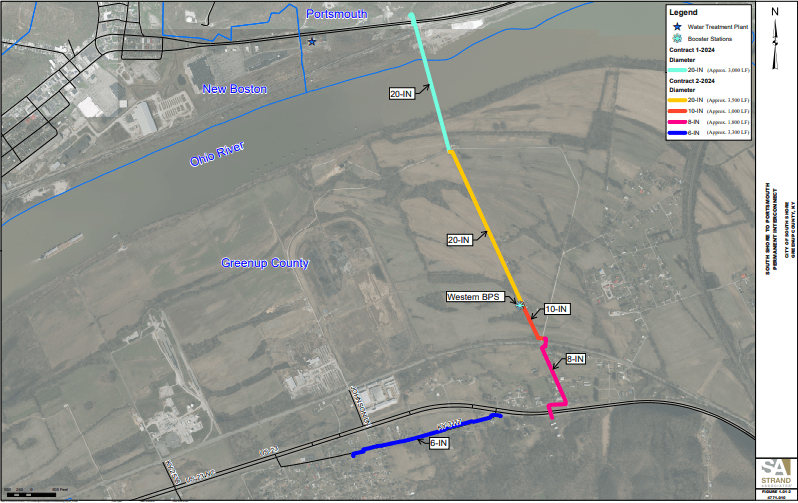
Moore said the line also could supply ample water to any future business relocating in the area and help develop the 1,000 acres that are available for development.
“It is such a relief to know that the construction will begin on a permanent waterline in July connecting South Shore to an adequate water supply of water for our 6,000 citizens and existing businesses,” Mayor Moore said.
Energy and Environment Cabinet (EEC) Secretary Rebecca Goodman commended those involved in bringing this project to fruition.
“We have a responsibility to positively impact our communities through our work to protect our state residents and the environment,” Goodman said. “During the city of South Shore’s time of need, we had the opportunity to do just that.”
Secretary Goodman thanked Deputy Secretary John Lyons, Sandy Williams, director of the Kentucky Infrastructure Authority, and Department for Environmental Protection Commissioner Tony Hatton for their work on the project.
Their efforts, especially, helped gain the project $8.6 million in Emerging Contaminants funding from the Drinking Water State Revolving Funds and $7.5 million from an Emerging Contaminants in Small or Disadvantaged Communities grant.
She also praised Environmental Control Supervisor Danny Fraley, Emergency Response Branch Coordinator Rob Blair, Environmental Scientist Consultants Larry Hughes, Melanie Arnold, and Carey Johnson who put many hours into making this solution possible.
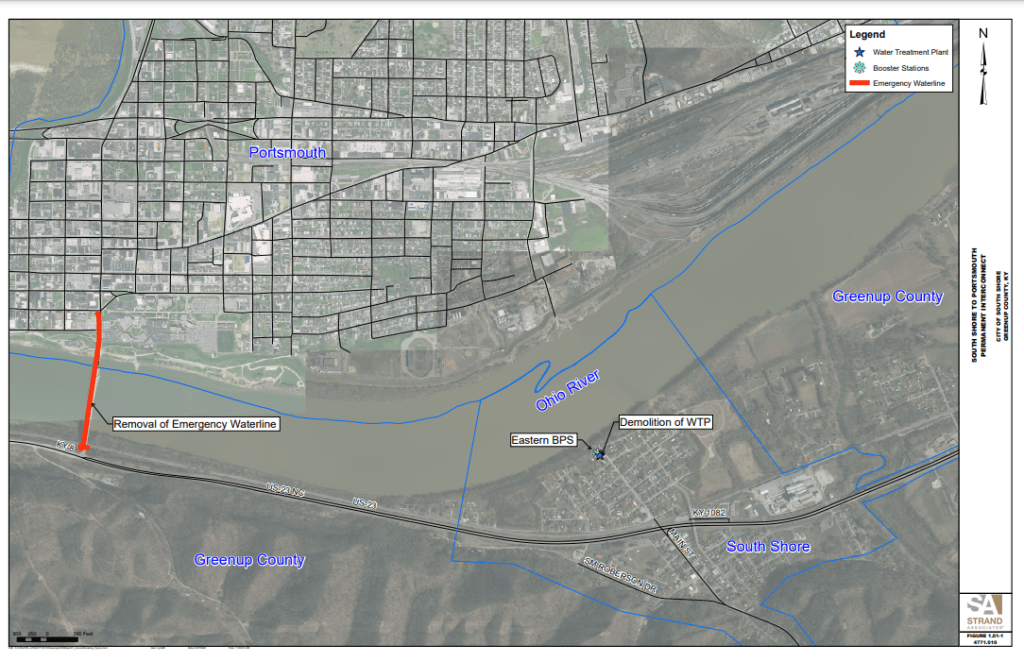
In 2022 South Shore shut 11 wells that supplied drinking water to the community due to the concerning levels of PFAS contamination tested. An emergency temporary waterline across the U.S. Grant Bridge allowed the city to purchase the bulk of its water from the City of Portsmouth.
Challenges and Solutions
The drinking water issue was discovered in 2019 when DEP conducted its first rounds of drinking water testing at 81 treatment plants across the Commonwealth. The Division of Water found some of the tests’ highest levels of the man-made “forever chemicals” in the city’s samples.
Perfluorooctane sulfonic acid (PFOS) is one of a group of related chemicals known as perfluorinated alkylated substances (PFAS). PFOS was detected at South Shore in a sample at 18.9 parts per trillion (ppt). PFOA, another PFAS chemical, was detected at 23.2 ppt. At the time, the EPA’s water health advisory level for these was 70 ppt. New EPA rules have now put that threshold at 4 ppt.
After declaring an emergency due to a lack of a reliable water source, Mayor Moore was authorized by the City of South Shore to find a suitable water supply in January 2022.
By June of that year, an emergency waterline had been installed on a bridge over the Ohio River to a drinking water treatment plant in Portsmouth, Ohio. This waterline will continue to provide additional water to the city until the project’s completion.
Last July, Emerging Contaminants funding from the Drinking Water State Revolving Funds were awarded to the city to assist with the estimated $16 million needed for the permanent water line.
And in October 2023, Gov. Andy Beshear presented Mayor Moore with a ceremonial check for more than $7.5 million to cover the remaining project costs from the Emerging Contaminants in Small or Disadvantaged Communities grant awarded to the Energy and Environment Cabinet through the Bipartisan Infrastructure Law.
Contractors Allard Excavation LLC and C.J. Hughes Construction Co. Inc. will handle the construction project.
Deputy Secretary Lyons praised the local leadership that made this possible and said he couldn’t see a better outcome for the city.
“This is a huge success story for addressing a very significant issue,” Lyons said. “After we did our initial rounds of drinking water samples, we met with Mayor Moore. Her leadership on this matter has been incredible.
“You usually don’t see local leaders take on a challenge of this magnitude. This problem was discovered by the cabinet through proactive sampling, and together, we found a solution that’s beneficial for everyone.”
Commissioner Hatton remarked that the city and mayor made a positive decision for the city’s future given the state of its wells.
“The City of South Shore drinking water production wells are impacted by per- and poly-fluoroalkyl (PFAS) compounds at concentrations exceeding the federal drinking water standards,” Hatton said. “Obtaining a source of municipal drinking water to replace the production wells is a positive step to improve drinking water quality for the citizens of South Shore. We appreciate the hard work of Mayor Moore and others to accomplish this important project.”






 Land, Air & Water