
By Brad Bowman
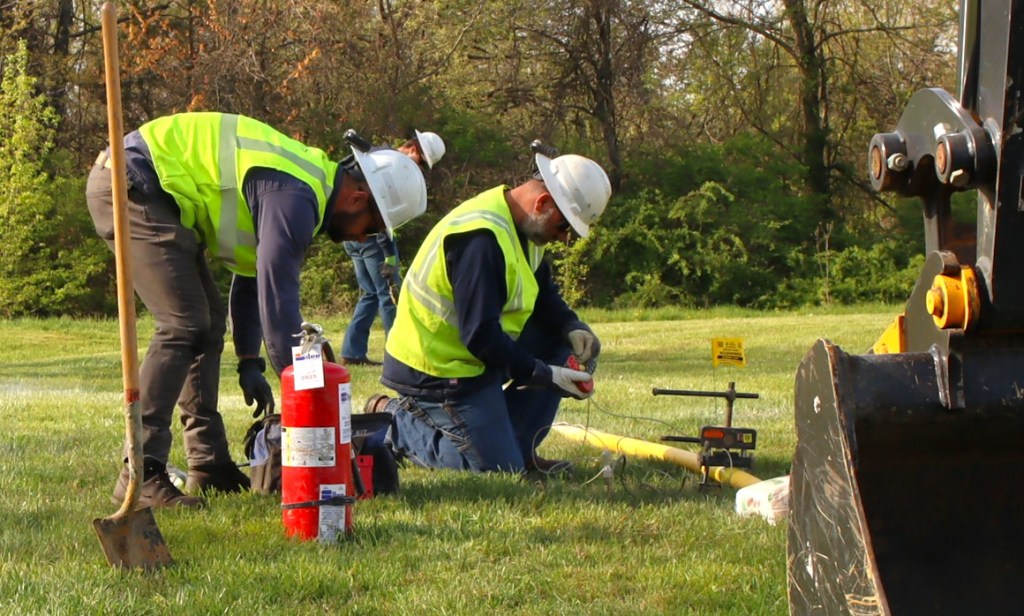
Nearly 900 gas pipeline leaks were caused by excavation last year in Kentucky, according to data from the U.S. Department of Transportation. But that number is down – half what it was in 2005 – in part due to awareness and the Pipeline Strike Response Training provided by the Kentucky Service Commission (PSC).
The latest training was held at the end of April at the State Fire Rescue Training Facility in Burlington. More than 90 operators and contractors made up the bulk of attendees, along with first responders.
The PSC conducts the events to keep communities safe and reduce the frequency of excavation damage to the more than 21,000 miles of pipeline running through the Commonwealth.
“We know that employing safe digging practices saves lives, “PSC Executive Director Linda Bridwell said. “Our goal at the Public Service Commission is not just to enforce the underground facilities laws for Kentucky, but to foster an environment that raises awareness, develops support and partnerships for education, and improves communications for everyone involved. The program is hopefully a step towards meeting that goal.”
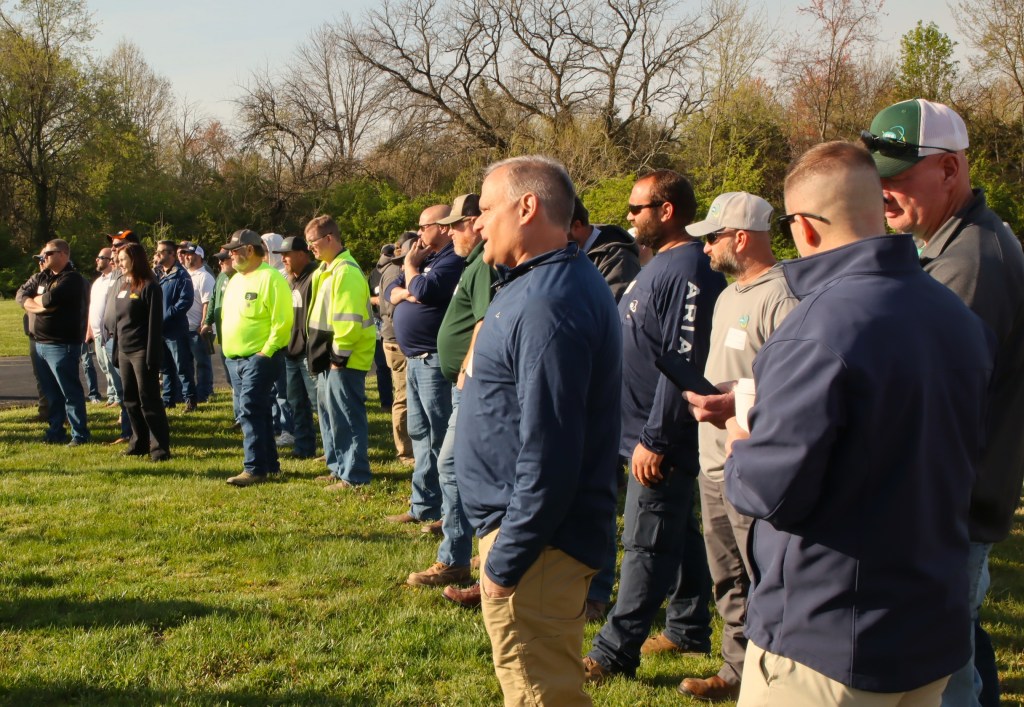
The training incorporates best practices for excavation and appropriate response methods to gas pipeline incidents for utility operators and emergency responders. Demonstrations include line locations, routine pre-excavation practices, and a simulated pipeline strike with response techniques. It offers a firsthand look at the collaboration involved in responding to an actual pipeline strike incident.
About 240 entities operate natural gas or hazardous liquid pipelines in Kentucky.
The PSC is charged with overseeing Kentucky’s call-before-you-dig laws. The commonwealth has an 811 phone service, that by law, must be called at least two working days prior to any excavation, which allows ample time for locating and marking utility lines.
Both excavators and homeowners could be penalized for not calling 811, ignoring location markers or using improper excavation methods. Operators could be penalized for not responding to requests to locate lines or for improperly or inaccurately locating or marking underground facilities. Funds that are collected as penalties are used for training and demonstrations.

According to 811 Kentucky, October 2024 broke any previous state record, with more than 64,000 line location requests. Inbound requests have increased for the past 12 years with nearly 2.7 million sent to utilities last year.
The PSC has two additional training demonstrations scheduled, one on May 7, at Western Kentucky University’s L.D. Brown Agricultural Exposition Center, and one on May 20, at the Ashland Train Depot.
For more information on the Pipeline Strike Response Training events click here.
Categories: All, EEC's Blog, Environmental Protection, Featured, Media Gallery, Public Service Commission






 Land, Air & Water